| . |
 . .
Back To: Calendar of Events |
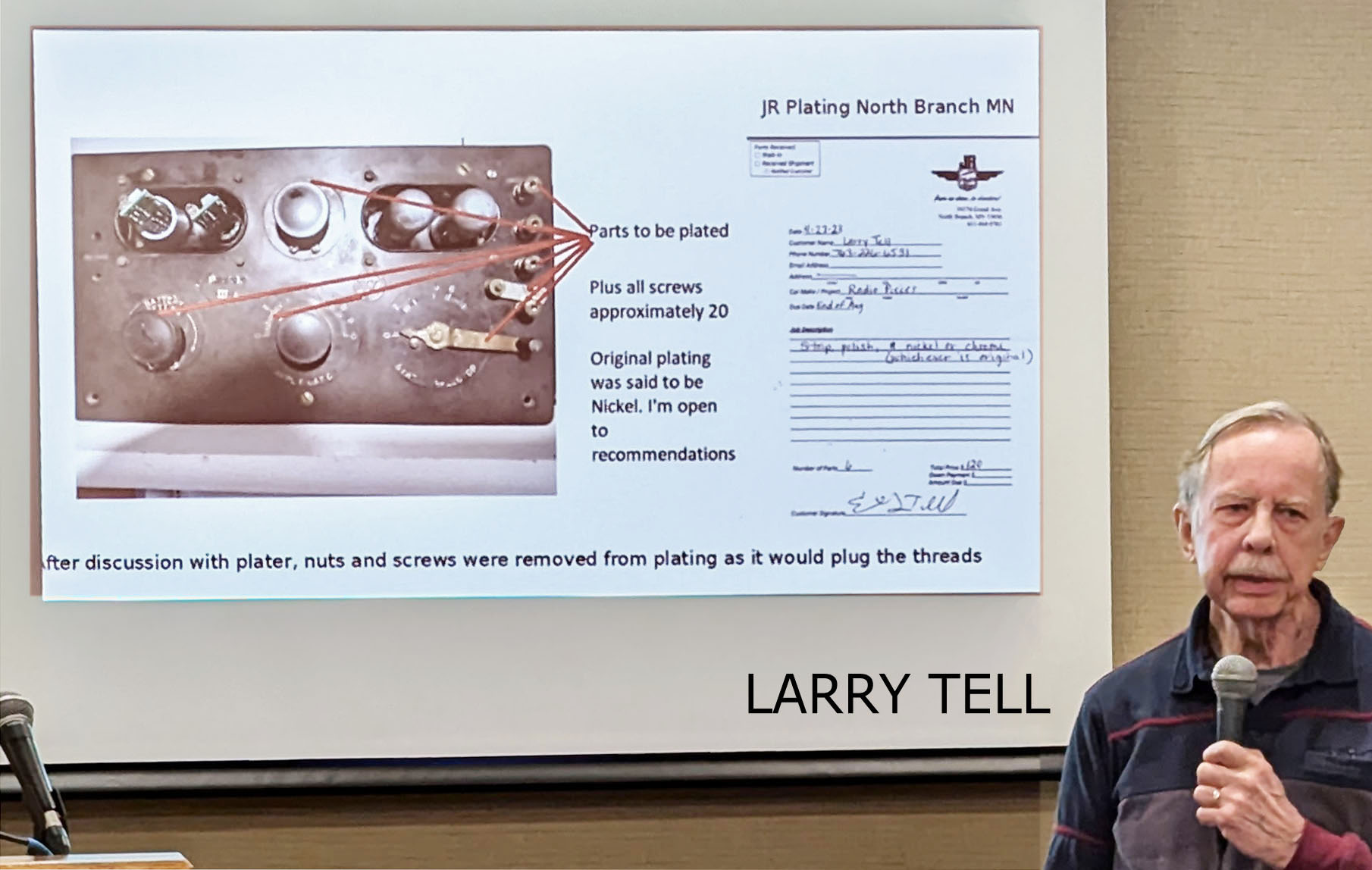
The Northland Antique Radio ClubSunday February 9, 2025NARC Workshop ReviewAround 40 people braved the cold winter weather on February 9th to attend the outdoor swap meet that precedes NARC's annual workshop each year. Some good bargains were to be had, including some decent radios that had been donated to the club and some from people who had heard about the swap and just came to get rid of radios they had but didn't want to throw away. After a few hours out in the swap meet it was a relief to go inside for the workshop! The workshop started at noon in the hotel's main ballroom with around 40 members attending. Bill Fanum had his sound system set up and we also made good use of the club's digital projector. Phillip Drexler and Jim Thompson gave brief updates on the club and Radio Daze 2025 before introducing Gary Ball who organized an interesting assortment of topics for the workshop again this year. 1. Larry Tell did an interesting presentation about how he had restored a 1924 RCA Radiola model III-A regenerative radio in rough condition. First, the inter-stage transformers had to be replaced and to keep their original appearance he disassembled them and replaced the original core and windings with modern miniature transformers that fit inside the original outer shell. The tube sockets are unusual, being suspended with strips of
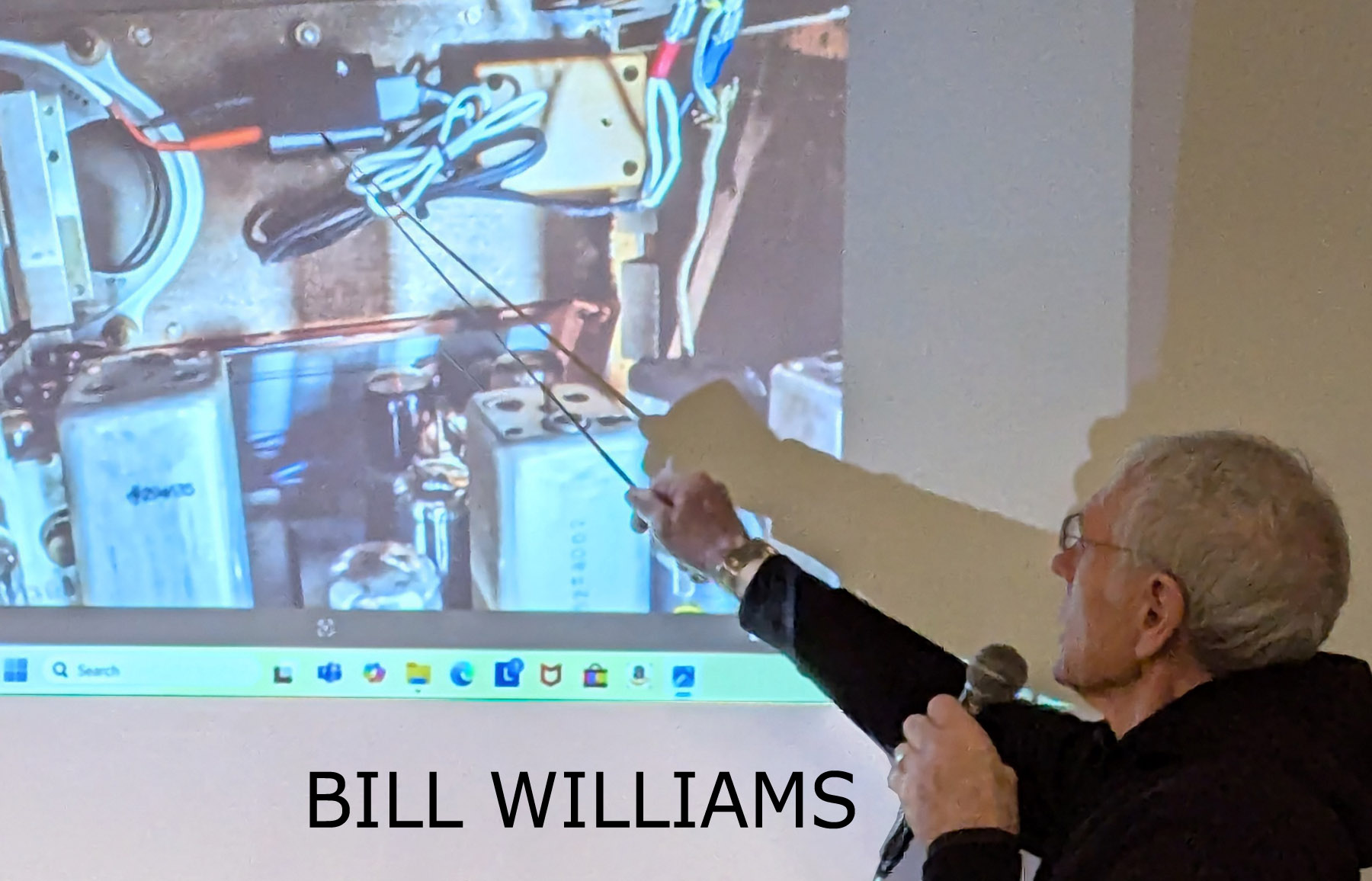
rubber that had deteriorated from age. He was able to buy exact dimension replacement rubber strips from The Radiola Guy, a vintage radio parts company. Another typical problem was that two flexible wires that pass through a bushing and twist as the variometers turn, had broken, so he replaced those. Then, there are five capacitors connecting to the various antenna terminals that someone had replaced long ago with capacitors that looked wrong. Larry took end caps from some original style capacitors that had bad cardboard tubes and put them on some empty bottle rocket paper tubes with new capacitors inside, so now they look more original and work well. The battery cable was also bad so he replaced it with a new cable that he dyed brown with wood stain so it would look correct. Good WD-11 tubes are expensive, so Larry tried several alternatives in adapters but preferred solid-state WD-11 replacements that he had designed. To improve its appearance, Larry found a plating company in North branch to re-plate the corroded metal parts, and to improve the black bakelite face of the radio he polished it with black shoe polish and then filled the engraving with a white paint stick. It turned out looking great! Larry's Radiola III-A restoration notes are online here. 2. Jim Thompson brought some Japanese transistor radios and told us about them. Three years after the Regency TR-1 was introduced in America, the first Japanese export transistor radio, the Sony TR-63 shirt-pocket 6-transistor radio was sold here in 1957 and was available in four different colors. They had produced transistor radios prior to this but didn't export them. Most TR-63 radios no longer operate today due to a warped tuning condenser. In 1958, the Toshiba TR-193, also known as the Toshiba 'Lace' sets, available in red or blue, were imported from Japan. They were designed for women and had a feminine appearance with actual lace encased behind clear plastic. The early versions had a reflexed superheterodyne circuit using 4 transistors and later versions had 5 transistors. 3. John Drewitz described how he repairs cracked plastic radio cabinets by placing very fine stainless steel mesh over a crack plastic and then using a soldering iron with a large flat tip to slowly and carefully melt the plastic and smooth it over the screen to achieve a strong "weld". He also was able to very carefully smooth out scratches and other imperfections in plastic radio cabinets by using the flat tip soldering iron at very low heat, just warm enough to barely soften the plastic. 4. Bill Williams explained how he installs small inexpensive Bluetooth devices in radios at their volume control or phono jack so they can connect to his phone and play whatever music or radio station he wants to hear, and demonstrated how they work.
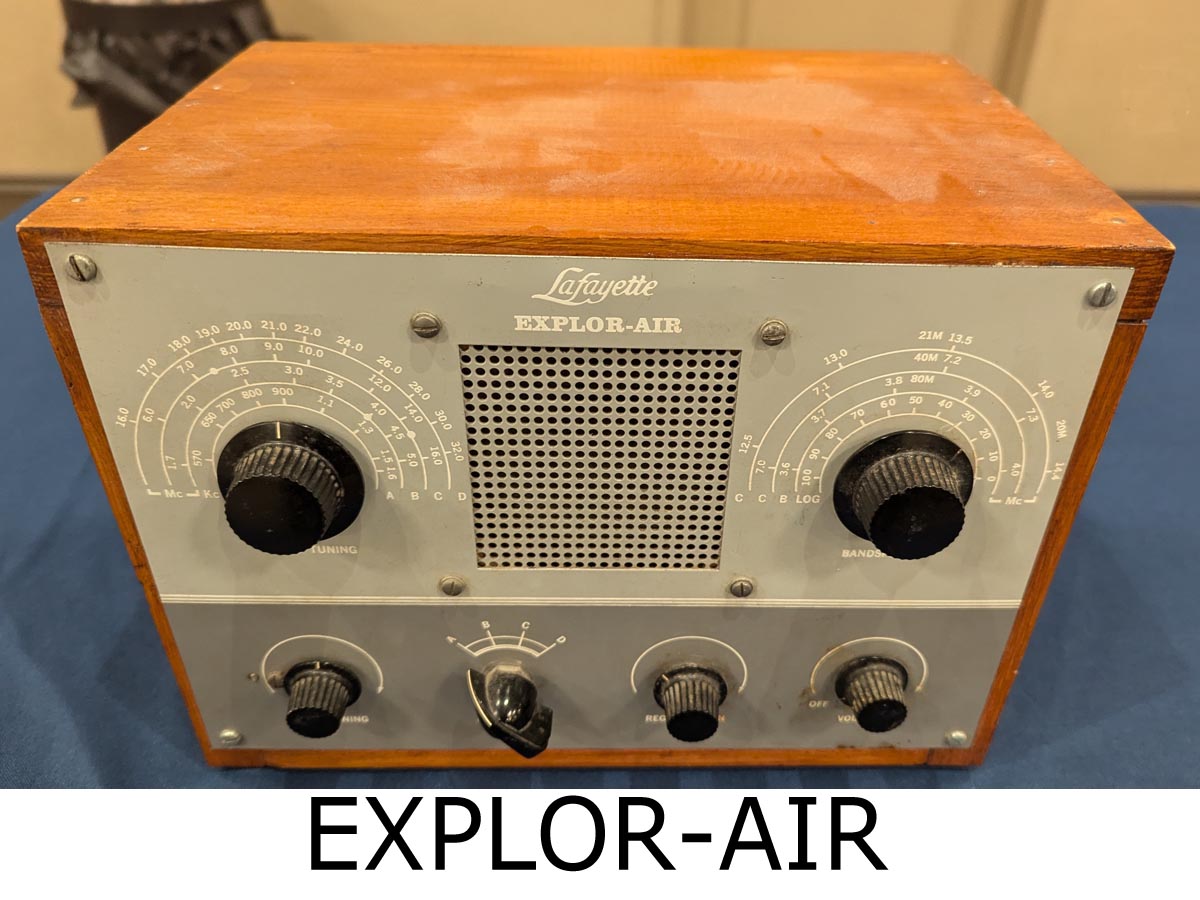
5. J.P. Houchins has restored several 1941 and 42 Philco Beam-of-Light radio/phonographs and gave a very interesting presentation that explained how the phonograph pick-up works and how to repair it. There is a mirror attached to the special sapphire needle that vibrates as the needle drags through a record groove reflecting light from a small 3.7 volt light bulb filament on the head of the tonearm onto a photocell that converts the light into an electrical signal. The light bulb is no longer available and must be a particular shape so the light focuses properly. There also are small rubber bushings that harden that he replaced with silicone so the mirror would vibrate properly. He has worked on five of these and found that the photocells usually still work, although some are weaker than others. To replace a bad photocell, he has modified one from a cheap Dollar Tree calculator to fit into the tonearm housing. Another aspect of restoration is cleaning the record changer itself. All parts must be cleaned and properly lubricated to they move smoothly, and rubber parts, especially the idler wheel, likely have hardened and need to be rejuvenated or replaced. 6. Randy Olson collects QSL cards. These are postcards that Ham operators have printed for themselves and then mail them to each other confirming a contact. They contain information about the operator who sent it, details of the contact such as the operator's call number, equipment used, time and radio frequency of the contact, etc., and often contain interesting graphics. Randy explained how QSL cards first became popular in the early 1920s and then proceeded to show us a large variety of cards he has collected, beginning with fairly plain cards in the 1920s to cards with more interesting graphics in the 1930s and up to the present time. 7. Kip Wallace explained how he repaints old metal advertising signs. Many of them had a crinkle type finish which is very difficult to reproduce today, but what he does is cleans off the old finish, spray on a de-rust type of primer, and then uses enamel rather than lacquer paint since enamel flows better and covers flaws better. Then he'll spray a clear matte finish over it. Show & TellA number of attendees brought radios to show. Larry started things off by showing a Lafayette Explor-Air radio that he's had since about 1961 and it still works. Gary had a 1950's Japanese radio without CD marks on the dial and with an American sounding brand, a 'Standard Radio Corporation'. He said it's a high quality radio but even so, he had sold it some years ago, and then more recently was glad to be able to buy it back.
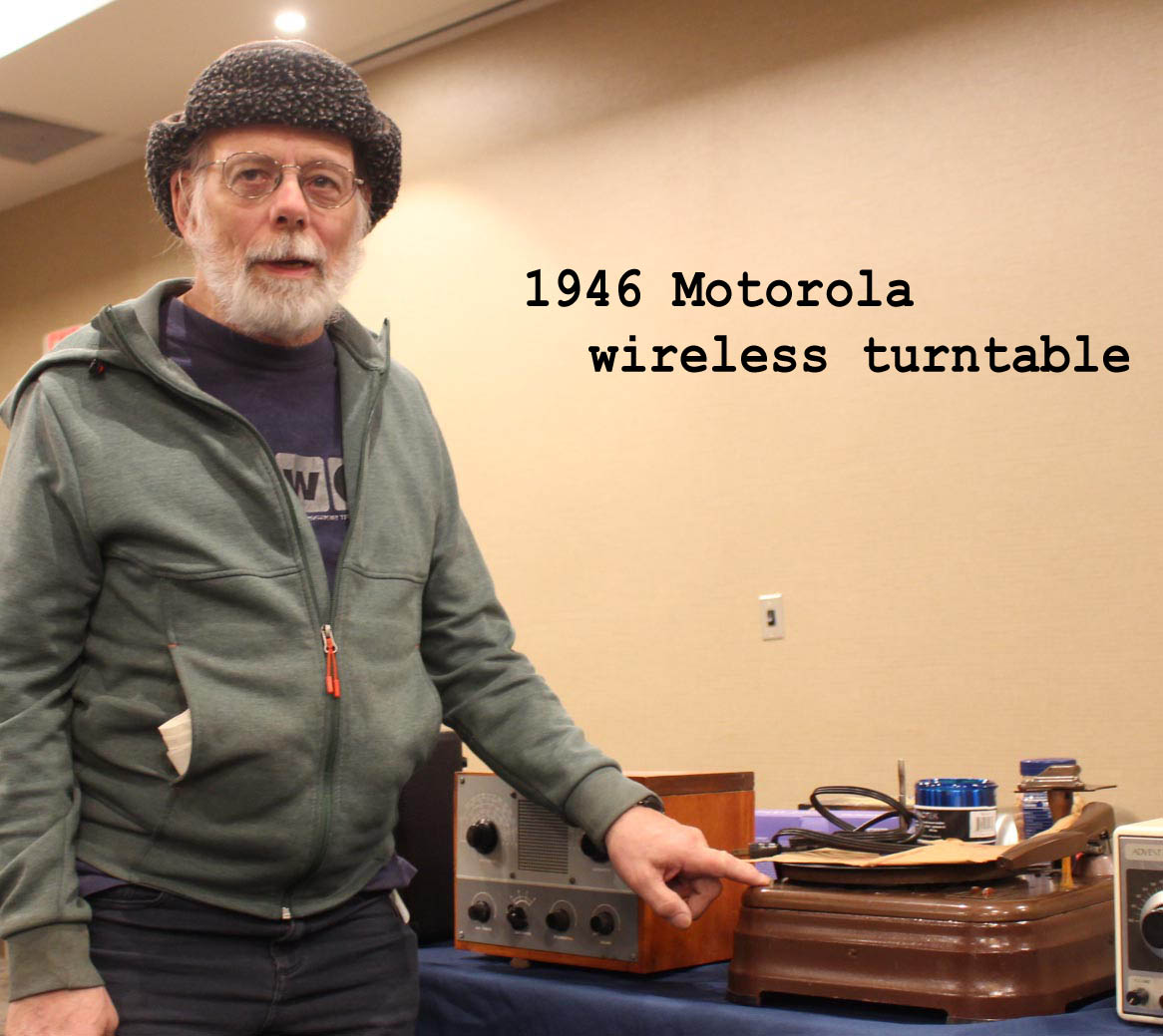
William had a 1946 Motorola wireless turntable with two tubes in its circuit that transmitted at 1400kC AM from an antenna wire (a third wire) in the AC cord. Kip brought a small chalkware bust of Herbert Hoover that says 'Herbert Hoover' on the front and 'RCA Radiotrons' on the back. Someone in the crowd speculated that it was made while Herbert Hoover was Secretary of Commerce, before he became the President.
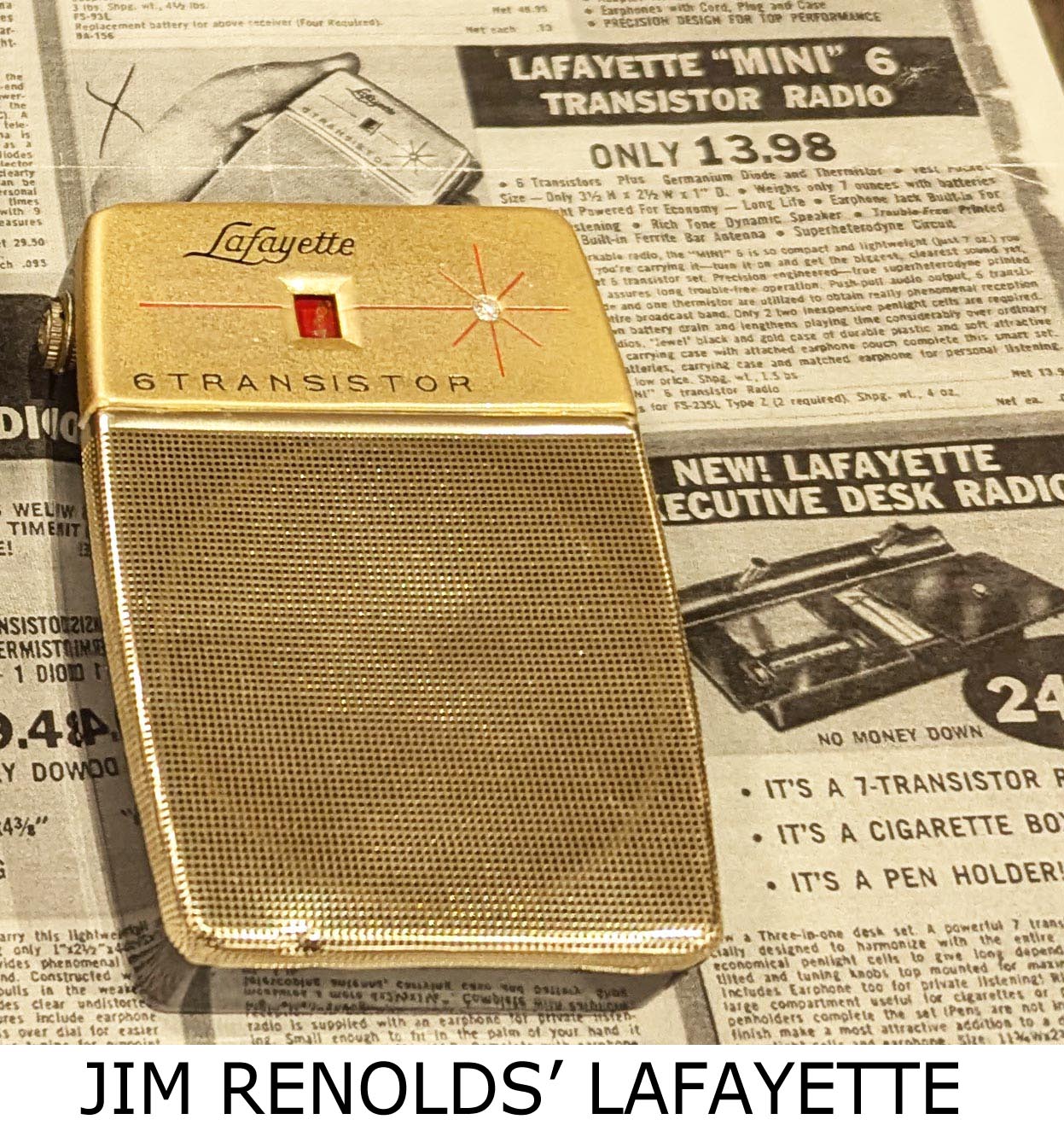
Matt showed a KLH set with acoustic suspension speakers. Tom had an old six-tube Emerson "runner" radio that he bought at a NARC Radio Daze meet to use as his daily runner. It had been 90% rebuilt, but Tom had to repair the dial string, and the dial scale was bad. Later, on a trip to Rochester, NY, at his family home there, up in the garage attic he found a pile of radio stuff he had left there many years ago, and amazingly there was a radio with the exact dial that his "runner" needed! Another collector was looking for tubes for his Radiola Balanced Amplifier and made some using a small military triode with a resistor to control the current draw to substitute for a WD-11. He put these in cut-down test tubes so they look like an actual tube. Jim Reynolds showed two of his favorite radios, a red and white Raytheon T-100 and another transistor radio that he found in San Diego that was the same as his very first radio. Richard showed a Ross Triumph multi-band (?) transistor radio probably from the late 50s or early 60s..
Prizes were given to the participants. Thanks to everyone who helped with this event! Copyright 2026. All rights reserved. The Northland Antique Radio Club |